People say a lot of bad things about Šlesers, and even more good ones. What is true and what is fiction? We gathered everything from open sources and checked every point. Each one links to its source. Know something we don't have, or spotted a mistake? Write to our chatbot in Telegram and attach proof.
Data as of 03.11.2026
Gain for Latvia+ €5966000000about 6 billion euros
≈ €3 bn already received: residence permits, tourism, EU money, wages, taxes. Another €3 bn, Riga Waterfront, is under construction.
≈ €10.3 bn including the effect after he left (estimate)
Loss for Latvia− €7525140.75 million euros
Confirmed: the unpaid debt of his former party. Including the unproven €3 m in the digital TV case, up to €3.75 m.
The good Šlesers has done outweighs the harm 7 900 times
Since 1 January this year, at their current pace, his initiatives have brought Latvia€0
About €597 m a year, €19 a second. Annual rates added up: residence permits €113 m on average, growth in tourist spending by 2008 €397 m, growth in LDz wages by 2007 €63 m, Rimi social tax €22 m, port taxes €2.4 m.
Since 1 January this year, compared with 2014, Latvia has missed out on€0
In 2014 the residence permit programme brought in €447.5 m, in 2024 just €18.4 m. That is a gap of about €429 m a year. Šlesers opposed tightening the programme. COVID and the 2022 ban on permits for Russian and Belarusian citizens also played a part.
Investment flows into Latvia: €1.64 bn via residence permits, €3 bn Riga Waterfront
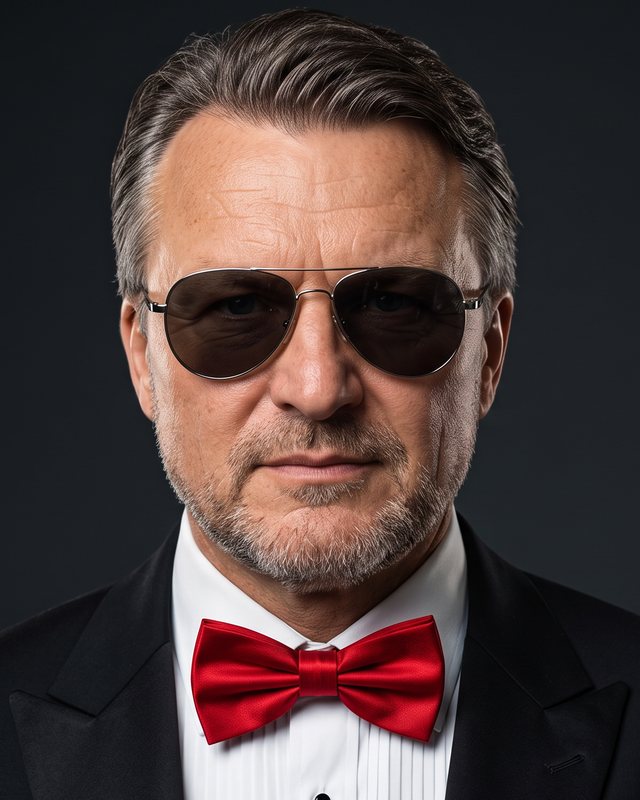
Ainārs Šlesers. Illustration, AI-generated
Dossier · Case No. 1970-01-22 · Sources: open
Who he is
Born
22 January 1970, Riga
Beginnings
Business in Norway; building companies in Latvia since 1992
In power
About 7.5 years out of 34. The rest in business or opposition
Posts
Minister of Economics, Deputy Prime Minister, Minister of Transport, Deputy Mayor of Riga
Family
Married to Inese since 1992, five children. His adult children live and work in Latvia
Lives
In Riga. No other citizenship; all property in his declaration is in Latvia
Now
Leader of the Latvia First party (LPV), 17 seats in the Saeima
Riga, 2025
Won the Riga City Council election: his party took the most seats, 13 of 60. But he did not become mayor of Riga: four parties struck a backroom deal without the winner
Riga Airport: 5.7 times more passengers
0
convictions across all the cases checked
≈ €6 bn
estimated gain for Latvia, ≈ €3 bn of it already received
13,08%
and 17 Saeima seats in the 2026 election, 84% more votes than in 2022
4
confirmed minuses out of 8 accusations checked
Illustration · construction
Illustration · the first supermarkets of the 90s
What he did
Achievements backed by documents
Confirmed1992–1998
Built a business from scratch in the 90s
He started out in Norway. Together with Norwegian investors Varner and Hagen he brought Rimi, Narvesen, Cubus and Dressmann to Latvia, along with the Galerija Centrs, Mols, Origo and Olimpija shopping centres and Radisson Blu hotels.
By his own account, he became a millionaire back in the 90s, before politics, on projects with Frank Varner.
He negotiated Ryanair's arrival. Passengers: 0.71 m in 2003, before Ryanair arrived, 3.16 m in 2007 and 4.07 m in 2009. airBaltic became the largest airline in the Baltics.
Double-check: you often read "a tenfold increase". Official statistics confirm a 5.7-fold increase from 2003 to 2009. That is impressive enough without exaggeration.
Confirmed2010–2024 · residence permits for investment
The residence permit programme brought in €1.64 bn
The programme has run since 1 July 2010, at the height of the crisis. Over 2010–2024 it attracted about €1.64 bn, with about 19,900 permits issued. In the first three years alone, 419.2 m lats came in. Šlesers calls it his initiative and, citing a Deloitte study, puts its total effect at 1.5 bn lats.
Official documents do not name the author of the law. Šlesers himself has said that, as a developer, he had a personal interest in the programme.
The Ministry for Children and Family Affairs was run by his party, LPP, with Ainārs Baštiks as minister. They introduced "mothers' salaries", a maintenance guarantee fund and about 300 playgrounds. The number of foster families grew from 15 to over 400.
The 24% rise in the birth rate is Baštiks' own figure. We found no independent calculation. Šlesers' personal role is described in his party's brochure.
He could live anywhere, but he lives in Riga. No other citizenship. In his candidate declaration all property is Latvian: Riga, Jūrmala, Dobele, Preiļi. The family business is here too: a port group in Riga and the Riga Waterfront development.
His children stayed in Latvia and work for it: Edvards on Riga City Council, Ričards was a member of the Saeima, Dana works at the Latvia First society. His party's motto: the interests of Latvia and its people always come first.
Minister of Economics (1998–1999), Deputy Prime Minister (2002–2004), Minister of Transport (2004–2009), Deputy Mayor of Riga (2009–2010). Member of the 7th–10th Saeima.
A project by Eagle Hills, the Abu Dhabi developer whose founder created Emaar. The Šlesers family holds a small stake; the investor puts up the money. The former port land of Andrejsala is set to get 8,000 apartments, shops, hotels, schools, a cruise terminal and a waterfront promenade.
Project unveiled, investor promises more than €3 bn
Construction began; by October work was under way on three buildings
Riga issued permits: two residential buildings and an aparthotel
Permit to convert the power station into The Powerhouse centre, due in 2028
The construction is already providing jobs for builders, and once complete the district will bring taxes, housing and service jobs.
Sources have not yet given a number of jobs. The towers in the promotional images are not yet approved: they need a new development plan.
2022: Latvia First entered the Saeima with 9 seats; he himself was among the leaders in voters' "pluses". 2025: first place in Riga, 18.17%. 2026: 13.08% and 17 seats, the second-largest force in the Saeima.
Secret owner of companies and deals at the Ridzene
KNAB spent years investigating conversations recorded at the Ridzene hotel. No charges were ever brought. Prosecutors found no evidence that he sought illegal influence or that he was offered anything; one of his remarks on the recording was taken as a refusal of such a deal. Hidden ownership of companies was not proven. The case was closed, and in 2018 a higher prosecutor spent nine months reviewing that decision and upheld it.
Šlesers' position: in 2011 KNAB staged a political show and never showed the public any evidence.
The Saeima refused to allow a search of MP Šlesers, and the search never took place. President Zatlers initiated a referendum, and 94.5% of those voting backed dissolution. The event did happen. The case for which the search was requested never reached court and was closed.
Prosecutors claim the project was artificially inflated through the company Hannu Digital (about €3 m). For Šlesers they sought a €65,000 fine, not prison.
Economic Affairs Court: all acquitted. The judge noted there was no victim: Lattelecom did not consider itself harmed
Riga Regional Court: all acquitted
The Senate overturned the acquittal; the case will be heard again
Šlesers' position: the case is fabricated, the contracts were signed under the Dombrovskis government and approved by the ministries, and the state gained hundreds of millions from digital TV. Status: not convicted; the case has dragged on for about 20 years.
This was said by Dmitry Muratov, editor-in-chief of Russia's Novaya Gazeta and 2021 Nobel Peace Prize laureate, in a YouTube interview. Latvian media spread his words on 30 September 2022, the evening before the Saeima election. Šlesers had no time to respond before the vote.
KNAB examined these claims for almost two years and in 2024 reported: no confirmation. Muratov himself presented no evidence, and SAB had no such information either.
Šlesers' position: it is a lie and pre-election smear. He himself asked KNAB and the security police to open a defamation case. What is true: after leaving politics he set up a logistics company together with Russian Railways (RZD), as confirmed by the head of SAB.
In the 2006 Saeima election, LPP/LC exceeded the spending limit by about 401,000 lats. KNAB put the party's debt to the state at 528,870 lats, about €752,500. The party was re-registered and then liquidated in 2011, and the debt was never paid. No court ruled on this debt.
Šlesers' position: the fine was ordered by his opponents inside KNAB. We found no documents in open sources that confirm or refute this.
On 7 December 2013, long before the war, at the congress of the United for Latvia party, he said the government should sit down with Russia's leadership and negotiate, as Germany does. These are his own words, recorded by LSM.
What happened next: after Russia attacked Ukraine in 2022, his party officially condemned Putin's invasion and expelled two MPs who refused to back that position and EU candidate status for Ukraine.
The "Prime Minister Šlesers" campaign was paid for by the Latvia First society. KNAB ruled it was party advertising, and companies are banned from funding parties. The party was ordered to return the money. This is not a fine. By June €90,000 had been returned, and by September the party had raised donations for the full amount. There is no official confirmation yet that everything has been returned.
Šlesers' position: it was his personal campaign, the posters carry no party symbols, and the law itself is badly made.
In the European Parliament election, KNAB fined three parties, including Latvia First, for reporting the placement of campaign materials late. Total for all three: €2,800.
Latvijas Pasts: the postal service cut its 2008 loss fourfold
More achievements
Found and checked against documents and open sources
Šlesers' position10–11.2026 · LPV leader
"Latvia must be saved"
After the 2026 election, Šlesers said his party's 17 MPs were ready to back Prime Minister Andris Kulbergs' government even without ministerial posts. He promises to vote for Kulbergs' reforms and for tough, even unpopular decisions: merging agencies and cutting spending.
€166 m from the EU for roads, rail and the airport
While he headed the Ministry of Transport, the European Commission approved five Latvian transport projects: 110.5 km of the Via Baltica and A12 roads, 260 km of track replaced on the East–West line, access routes to the ports of Ventspils and Liepāja, and the Riga Airport runway extended to 3,200 m. The EU provided €165.9 m of the €384.3 m.
The new runway alone cost €23.5 m. Since October 2008 Riga has been able to take heavy aircraft such as the Airbus A340 and Boeing 747.
In May 2005 he agreed with the head of Tallink on a daily Riga — Stockholm route. It opened in April 2006 and carried 5.5 million passengers in its first 10 years.
In 2007 the government adopted the road safety programme he had signed: halve the number of road deaths by 2010. The target was reached a year early: 558 deaths in 2001, 254 in 2009. Latvia received the ETSC Road Safety PIN Award 2009.
Experts also put part of the 2008–2009 drop down to the crisis: there were fewer cars on the roads.
When Latvijas Pasts was losing millions and failing to deliver the press, he proposed a new head, and on his ministry's report the government allowed the post office to take a loan. In 2008 the loss shrank fourfold: from 14.1 to 3.66 m lats.
While he was minister, airBaltic, majority-owned by the state, grew from 0.59 m passengers in 2004 to 2.6 m in 2008, and its fleet to 28 aircraft. The company's social tax for 2008 alone was 7 m lats, about €10 m.
From July 2009 he chaired the board of the Freeport of Riga. In crisis-hit 2009 the port handled a record 29.7 m tonnes, and in 2010 it topped 30 m tonnes for the first time in its history.
As Deputy Prime Minister he led the government working group on improving the business climate, opened a London office of the Latvian Development Agency and championed an investment agency built on the "one-stop shop" principle. LIAA was set up in 2004 and still operates today.
As Minister of Economics he removed Ventspils mayor Aivars Lembergs from his role as the state's representative at Ventspils Nafta. Even Prime Minister Krištopans, who was demanding his resignation, called it the minister's "only professionally bold step".
Standing in for the Prime Minister, he signed the rules on an allowance for adoptive parents: 1,000 lats per child. At the end of 2004 the ministry reported that, for the first time since independence was restored, not a single baby under one without serious health problems was waiting to be adopted, thanks in part to the allowance.
On a proposal from Latvia's First Party (LPP), which he co-founded, the Saeima wrote protection of marriage as a union of a man and a woman into Article 110 of the Constitution: 65 votes for, 6 against. The amendment was backed by more than 10,000 citizens' signatures.
On 25 June 2008 Ukrainian President Viktor Yushchenko awarded him, then Latvia's Minister of Transport, the Order of Prince Yaroslav the Wise, 3rd class, "for a significant personal contribution to the development of Ukrainian-Latvian cooperation".
He collected the signatures of 34 MPs, and the Saeima set up an inquiry committee into the consequences of the financial sector "overhaul" and the closure of ABLV, PNB and Baltic International Bank. The committee proposed lifting the excess burden on businesses caused by inflated requirements for bank customers.
By his account, a sacral tourism programme was created on his proposal, and many churches in Latvia received money for repairs. In 2006 Cardinal Jānis Pujats, Archbishop Jānis Vanags and Bishop Pēteris Sprogis publicly thanked his party for this money.
Confirmed amounts only. Hatching means the money is promised but not yet fully invested, or it is a prosecution claim that has not been proven.
Confirmed by documents€1.64 bn
investment under the residence permit programme, 2010–2024, 19,900 permits
In progress+ €3 bn
Riga Waterfront, under construction since 2025
Confirmed minus€0.75 m
unpaid fine of his former party
On documents alone, up to €4.8 bn of gains against €0.75 m of losses. Even counting the unproven €3 m in the digital TV case, the gains outweigh the losses hundreds of times over. Šlesers' own estimate, citing Deloitte, puts the total effect of the residence permits even higher, but we have not verified it and do not include it in the total.
What Latvia gained and lost
Millions of euros, one scale. The minuses are barely visible: they are hundreds and thousands of times smaller than the pluses.
"Document" = a figure from a report. "Calculation" = arithmetic on official data.
€1.64 bn
Residence permit programme, 2010–2024
Document19,900 permits. He calls the programme his initiative
€1.02 bn
Spending by foreign tourists, 2004–2008
Calculationspending rose from €177 m in 2003, before Ryanair arrived, to €574 m in 2008. Growth over the 2003 level added up over 5 years. The years of Ryanair and the hub airport
€110 m
Growth in railway workers' wages, 2005–2007
Calculationthe average LDz wage doubled, from 261 to 533 lats, across 13–15 thousand employees
€22 m
Rimi Latvia, 2024 alone
Documentsocial tax only. He was the first director of Rimi Baltija; the chain's turnover is now about €1.2 bn a year
≈ €7 m
Taxes paid by the family's port group, 2023–2025
DocumentVID data, published years only. The family owns the group through a holding company, with 50% held by the Šķēle family
€3 bn
Riga Waterfront
Promisedunder construction since 2025. Investor Eagle Hills from Abu Dhabi; the Šlesers family has a small stake in the project
€165.9 m
EU money for transport, 2004–2005 projects
Documentthe EU Cohesion Fund approved five Latvian projects while he was Minister of Transport: the Via Baltica and A12 roads, 260 km of track, port access routes, the airport runway. Total cost €384.3 m
≈ €6 bn
Total
≈ €3 bn already received and €3 bn in progress
Tourism and wage growth were also driven by EU accession and the economic boom. The microenterprise tax is not included: documents show it was pushed by Kampars and Bērziņš.
Not in the total, but it is even more
Cannot be counted: there is no open data. So it is not added to the sum.
EstimateTourism after 2008: ≈ €4.4 bn. We counted tourist spending only for 2004–2008. If the 2008 gain (+€397 m a year over 2003) held through 2009–2019, that is another ≈ €4.4 bn. The airport, which became a hub under him, grew to 7.8 million passengers in 2019.
No amountDeputy mayor of Riga, 2009–2010. In October 2009 he launched the city brand Live Riga with a starting budget of 1 million lats. According to the port's head, he pushed moving terminals from the centre to Krievu sala, freeing space for a new district.
HypothesisRimi taxes for all years. Social contributions for 2024 alone were €21.7 m. The chain has operated since the 1990s; over all those years it adds up to hundreds of millions.
Amount in dollars1990s shopping centres and brands: Galerija Centrs, Origo, Narvesen, Cubus, Dressmann. Norway's Varner and Hakon had invested $40 m in Latvia by 1998, and their Linstow Varner about $80 m in Riga shopping centres by 2000. Thousands of jobs; 30 years of taxes are not published.
Developer's estimateSaliena: over €300 m. The project he started in 1999 has grown into a district of almost 500 ha: three international schools, a golf club, hundreds of homes. The investment came from later owners, so it is not included in the total.
Still aheadRiga Waterfront and the port. Taxes from future residents and businesses, port taxes before 2023 — no open figures.
≈ €10.3 bn
Including the effect after he left
€6 bn documented plus ≈ €4.4 bn estimated tourism for 2009–2019. This is an estimate, not a document
WinRiga, 2025: first place. 18.17% and 13 of 60 seats, the most of any party. He did not become mayor: four parties from 2nd, 3rd, 4th and 7th place made a deal without the winner (34 votes). Šlesers' position: keeping LPV in opposition is “a death sentence for this coalition”.
In committeeState Audit Office to audit Saeima spending. Sent to committee, May 2026.
In committeeProtecting children from LGBT propaganda and penalties for gender transition of minors. Sent to committees with ZZS support, September 2025.
Back in playTwo sexes in the Constitution. Rejected in January 2025 (37 for, 43 against), resubmitted in June 2025 and sent to committee.
RejectedNo dual citizens in top posts: Saeima, ministers, KNAB, Bank of Latvia. April 2026.
foster families under the Ministry for Children and Family, run by his party
≈ 300
playgrounds built in the same years
Ryanair
cheap direct flights from Riga to Europe after his negotiations
90s
Rimi, Narvesen, Cubus, Dressmann and new shopping centres came to Latvia
since 1992
in one marriage, five children
19 900
residence permits for investment from 2010 to 2024; the first money came at the height of the crisis
VEIKALS
Tourists: spending rose from 142 to 403 m lats a year
DZEMDĪBU NAMS+
Birth rate: 19,996 babies in 2002, 23,948 in 2008. The Family Ministry was run by his party
Illustration · Riga — Stockholm
Illustration · Riga Waterfront under construction
His projects
Where he was a founder, manager, initiator or co-owner. Each role is stated as the sources confirm it.
90s business
First director
Rimi Baltija
CEO in 1996–1997, when the first Rimi store in Latvia opened. Rimi was the first of the three largest chains to arrive; in 2020 it had 133 stores and more than 6,000 employees.
CEO
Varner Baltija
Cubus, Dressmann, Bik Bok, 1994–1998. With Dressmann in Riga in 1995, the Varner group began expanding abroad. By 1998 Norway's Varner and Hakon had invested $40 m in Latvia.
Chairman of the Board
Galerija Centrs
The former Centrs department store in Old Riga, 1995–1998.
Helped develop
Shopping centres
Mols, Origo, Olimpija, Dole, Alfa, Minska through joint ventures.
Helped develop
Narvesen
A kiosk chain replacing the Soviet Soyuzpechat newsstands.
Helped develop
Radisson Blu
The Latvija and Ridzene hotels in central Riga.
His company started the project
Saules akmens
His company won the tender for the site and started the project. The tower was built by Merks and Hansabanka in 2004: the first skyscraper of independent Latvia, now Swedbank's office.
Author of the idea, by his account
Saliena and Piņķi
Šlesers' position: he is the author of the idea and the founding father of Saliena; he bought up the land for the new town together with Frank Varner. According to documents, he was a co-owner of Saliena Real, the project's first company, and sold his shares in 2002. In November 2002 he became Deputy Prime Minister.
Minister and politician
Minister of Transport
Riga Airport and Ryanair
The Ryanair deal; passenger numbers grew 5.7 times over 2003–2009.
Minister of Transport
Riga — Stockholm ferry
In 2005 he agreed a daily route with Tallink. Over 10 years it carried 5.5 m passengers.
By his account
Residence permits for investment
He calls the programme his initiative. €1.64 bn of investment over 2010–2024.
His party
Ministry for Children and Family
"Mothers' salaries", a maintenance fund, about 300 playgrounds.
Founder
Latvia First (LPV)
A party since 2021. 17 seats in the Saeima in 2026.
Family projects today
Co-owners
Riga Port Group
A major port group in Riga: terminals, stevedoring, containers and its own railway. About 400 jobs and more than €14 m in payroll taxes for 2023–2025.
Involved
Riga Waterfront
A new district on Andrejsala, €3 bn from an Abu Dhabi investor, under construction since 2025. The land was bought from the state for €5.8 m, 5.2 times its cadastral value. Riga has not put any money into the project.
Votes for his party: 57,033 in 2022, 105,198 in 2026, 84% more
Fact-check summary
Achievements
Business, the airport, transport through the crisis, residence permits, family support, growing voter trust. All with links to documents.
Headline accusations
The loudest ones were not confirmed: KNAB found the "Putin money" claim unconfirmed, the "oligarchs case" was closed, and the digital TV case ended in two acquittals.
Real minuses
The unpaid debt of his former party from the 2006 election, his 2013 remarks about negotiating with Russia, the dissolution of the Saeima in 2011, and the €340,000 returned for advertising in 2026.
Conclusion
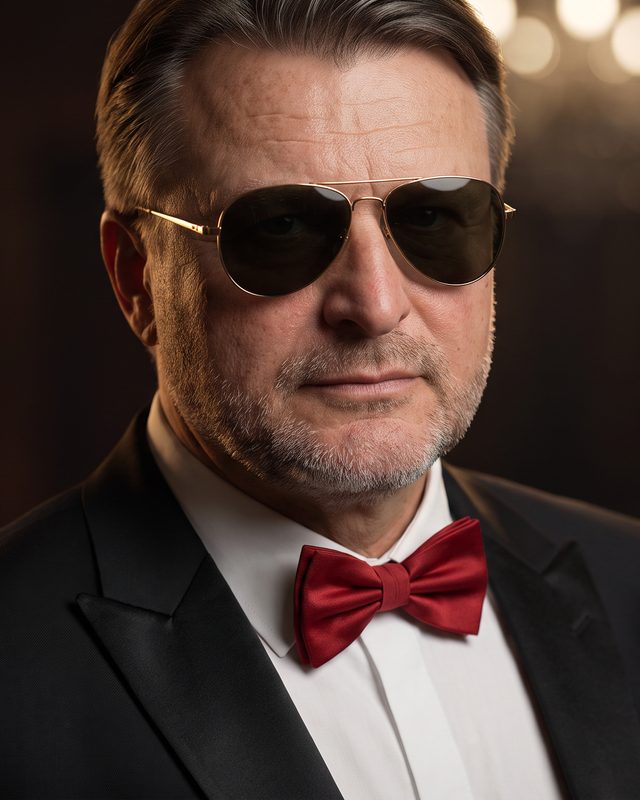
Ainārs Šlesers. Illustration, AI-generated
+ €6 bn of benefit to Latvia against − €0.75 m of confirmed harm. The benefit is 7,900 times greater.
0 convictions. The loudest accusations were not confirmed: KNAB did not confirm the "Putin money", the "oligarchs case" was closed, and the digital TV case ended in two acquittals.
7.5 years in power out of 34. In that time the airport grew 5.7 times, and in the 2009 crisis Riga grew by 10% while Tallinn and Vilnius fell by 26% and 36%.
Trust is growing. In the Saeima elections his party's vote rose by 84%. Behind it is a record as minister and entrepreneur that you can check through the links on this page.
The benefit still works today. Under him the railway made a profit: 28.3 million lats (≈ €40 m) in 2007. In 2024 it posted a €39.4 m loss. The airport, port and tourism he launched still work today.
Our conclusion: Latvia needs Šlesers' experience and energy now. It is no accident they call him “the bulldozer”.